Monday, 19 September 2011
Evil Weetabix
Great article by Charlie Brooker in today's Guardian about the repugnant practice of advertising to kids, and how consumerism is finding new ways to enter our lives.

Thursday, 15 September 2011
How to change the world

This interesting article in the New York Times got me thinking again about something I'd been working on a few years ago - the question of how to we can gain the level of change needed to tackle big global issues like global warming and just what role we as individuals can play in this.
The article made me wonder whether we're getting it the wrong way round when we take things like the carbon footprint of the world and divide responsibility for it between individuals, as individuals are often not the agents whose actions and decisions will produce the level of change that is needed - it's companies, countries and other institutions and groups of people.
So, if we want to seek change on big issues, perhaps we need to redistribute the level of responsibility for these things - and assign more responsibility to those agents with the level of influence and power to make the big changes . This doesn't diminish our responsibility to live good lives as individuals - but simply rebalances the burden of responsibility for change to those agents that have the power to make it happen on a big scale.
This also affects the way we might go about seeking change in the world as individuals. It doesn't mean we should stop 'doing our bit' or stop leading planet-friendly and compassionate lives - as these are part of living in line with our everyday values as individuals, and this is a vital part of what it means to live a good, dignified, fulfilled human life. But what it does mean that if we're seriously looking to change the world as individuals we should be prioritising something else - and that is to do everything we can to influence the real agents for change on these issues.
So, if each of us is serious about getting a better world, let's separate the actions we can take to live in line with our values as individuals (like planet-friendly living) from the actions we can take to gain real change (like lobbying companies, voting, becoming politically active) - and then do both of these things.
Wednesday, 24 August 2011
Consumerism for babies - part 2
A few months ago I wrote about the highly questionable presence of Bounty packs in maternity wards (see this post for a reminder) and the unpleasant form of 'captive consumerism' they seem to enforce on new parents.
In the last week the Independent has also covered this issue in an article that explains more of the commercial workings behind the scheme - and the evidence they present makes the whole idea even more unpalatable.
Both the National Childbirth Trust and the Royal College of Midwives object to this practice, so it's about time we saw it stopped. Contact the NHS Confederation to tell them you want to see an end to it.
In the last week the Independent has also covered this issue in an article that explains more of the commercial workings behind the scheme - and the evidence they present makes the whole idea even more unpalatable.
Both the National Childbirth Trust and the Royal College of Midwives object to this practice, so it's about time we saw it stopped. Contact the NHS Confederation to tell them you want to see an end to it.
Friday, 1 April 2011
Making sense of modern life

Here's our new, improved summary of the social need for Life Squared and what the organisation does to address it... Click here to download the summary.
Friday, 25 March 2011
The wonders of the universe
 Everyone seems to love the latest BBC popular science programme 'The Wonders of the Universe' and it's no surprise - apart from having everyone's favourite former-pop-star-prof as a presenter, it provides an awe-inspiring view of the universe that we live in.
I think having a regular dose of this sort of perspective is important in our lives. It helps us to retain a sense of balance and context for our lives, and to appreciate both our relative insigificance in the great scheme of things and the remarkable fact that we are alive in the first place. See this link for an article on the value of perspective.
At Life Squared, we're currently redeveloping our website, and one of the new features the new site will carry is an interactive tool to help people see various aspects of their lives in a broader context. Apart from simply being very interesting, it may well encourage users to think about their lives and how they live them. Keep checking the site in late April/May to find out more...
Friday, 25 February 2011
Consumerism for babies

It's been a while since my last post because of a particularly busy period of work and the arrival of a new member of the Docwra household. The process of having a child has opened a door to a whole new world that many non-parents may be unaware of - and consumerism seems to have a strong hold over this new parenting world!
Take the Bounty pack for example - these are packs of free goodies given to new parents at the hospital just after their baby has been born. The Bounty pack reps are allowed to wander through the maternity wards distributing their packs - and they do this in a way that not only seems to have the blessing of the NHS, but that also seems to be an integral part of its maternity service.
This is a serious piece of misrepresentation, as in reality the Bounty pack is simply a commercial tool. It says it provides 'expectant and new mums with...important information, expert advice, support and try before you buy samples', but in reality it is simply a bag of samples and advertisements for baby products. Take out the promotional items and you are left with nothing of any informational value. And these promotional items are being presented to a captive audience, who are new to their role as parents and slightly vulnerable, masquerading as information from the country's trusted health service.
I was so suprised at how a piece of commercialism was allowed to get into such a sensitive part of our health service in this way that I asked a midwife about it. They (slightly sheepishly) agreed that these packs are basically just a load of adverts and product samples.
I'm not having a go at our health service - it is one of our great institutions and the care we received was absolutely brilliant. I just feel this is a great example of how the influence of consumerism can seep into every aspect of our lives - from the minute we are born - and that we need to do something to halt its spread.
Sunday, 3 October 2010
How should we talk about climate change?
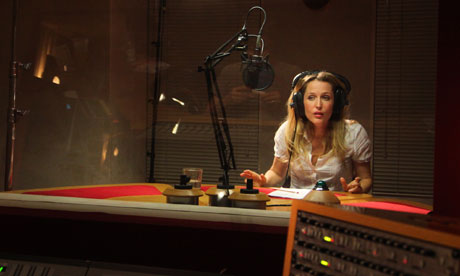
In recent days there’s been much discussion about the ‘banned’ advert from the 10:10 climate change campaign, which was withdrawn after it had upset a number of people with its cartoon violence images of environmental campaigners blowing up recalcitrant members of the public. Find out more background on the ad and see the video itself here.
I’m not bothered about whether the ad was offensive or not – my problem with it is that it simply wasn’t very good. The aim was to bring the issue of climate change back into the headlines, which it did, but for the wrong reasons as it (again) made environmental campaigners look like clumsy amateurs. It was patronising and one reached the end of the video thinking ‘what was the point of that?’.
It lacked any real sophistication or irony, and as a result may have reinforced many people’s prejudices about environmental campaigners. It also fuels the idea that people in the environmental movement really have no idea on how to communicate with the public on these issues. We are throwing everything – and anything – at them in the hope that it will stick and gain behaviour change. We are failing to gain the change we need (if this were possible in the first place*) and in the meantime are alienating people with calls to action which are either too small and potentially counterproductive, tainted with green consumerism or, like this advert, simply lacking in any motivational power or call to action.
We need to get more sophisticated in the way we approach communications on climate change, and one of the key ingredients in doing this is to really understand the drivers of people’s attitudes and behaviours on this issue. These include our habitual and unconscious behaviours as well as how we respond to wider societal and cultural influences – one example of the latter is the role of advertising in driving people towards materialistic values, which can make us less responsive to calls for pro-environmental or pro-social behaviour. There is hope though – a number of places are doing this research, including the RESOLVE centre at Surrey University, and some forward-thinking NGOs are starting to think about these issues too – for example, check out the new report ‘Common Cause’ by Tom Crompton of WWF.
*Not only do we need to think about how to seek behaviour change - we also need to understand our goals better as a movement and give serious reflection to what we can really hope to achieve on the issue of climate change. But that’s a topic for another blog post...
Subscribe to:
Posts (Atom)

 Posts
Posts


